Showing posts with label thoughts on writing from one novice to another. Show all posts

Saturday, August 22, 2009

Can you judge a book by its cover?

I was in the market for a bit of “mind candy” reading the other day and went to my local bookstore to see what might satisfy my literary sweet tooth. As I wandered through the different genre sections, I began to notice something about the books that actually made it into my small pile of “potential” purchases. Each and every one of them had fantastic cover art or photos. Convinced that I was being led astray by “glitz & glam” rather than a good story, I took a few moments to look beyond the book jacket or back cover teaser and read some pages from the first chapter as well as randomly selected pages from later portions of the books. Out of five possible purchases, only one book was returned to the shelf as a dud. For kicks and grins, since I had nowhere pressing to be, I picked up some books with really awful (as in boring) covers and checked out their teasers as well as random pages within. What I discovered was that book covers can provide some indication of what you can expect between the pages; with the exception of well-known, award-winning authors who can do anything they please in terms of covers and still expect a sale.

My grandmother was fond of the “you can’t judge a book by its cover” philosophy towards life but I think, noble sentiment that it is, it falls flat as a practice for a new author competing with the known for book sales. This is not to say that an intriguing book cover is about spending a huge amount of money on models, photo shoots, or buying art. It is about finding something that connects the reader instantly with the theme, and combined with the teaser draws them into a well written story. The three elements must balance because a slick cover and a “sexy” teaser may get the book to the cashier, but without a story to back it up, you won’t have anyone waiting for your next book.

Thursday, January 22, 2009

How do you know when the storyline is done?

Some authors like to end their stories with all the threads thoroughly knotted and no loose ends to plague the reader with “what happened to…?” Other authors leave you hanging, not unlike season finale cliffhangers on television. Then there are the stories that can stand alone or provide the basis for furthering a series that will continue the story.

It seems to me that there is a real art to mastering this, because I am not sure a story is ever really done. Much like our own lives, the lives of our characters continue to develop unless we kill them off in our stories – and with a paranormal romance, even that is not necessarily a permanent thing. I really enjoy reading series. There is something about immersing myself in the world that an author has created that I find more appealing than a standalone story. The original Dune series is probably one of my favorites and when Frank Herbert passed away I was seriously depressed that the series was over. When his son decided to carry on with the prequels, I was ecstatic and have bought each new book as it has come out. A series lets the reader really get to know the characters and the culture from the different points of view in a way that is simply not possible in a standalone book.

Unfortunately, some authors do not seem to realize when the storyline is played out. As a novice writer, I’ve pondered how I can prevent cannibalizing my storylines or sucking the life out of them. When is it time to hit “save” and push away from the computer? The knee-jerk response is when the characters stop “talking” to you but even that isn’t a safe guideline to adhere to. As with your day to day interactions, not everyone talking is actually saying something of significance.

For now, I plan to trust my critique partners and my editor to help me strike that balance between giving just enough to keep my readers coming back for more.

Monday, November 17, 2008

Help! I’ve written myself into a corner and I can’t get out…

I had this great outline for a chapter. I knew exactly what I wanted to say and where my characters were going. It was – in my mind – perfect. A month ago I started writing and before I knew it the characters hijacked my storyline and took a route that ended at a dead-end; a dead-end that has nothing to do with the rest of the story or the six chapters preceding it.

With a degree in English (writing concentration no less) and a “day-job” that involves helping others condense their ideas, plans, and/or processes down to a clearly written document, I know all the tools and techniques for overcoming writing obstacles. This problem is less about the mechanics of writing and more about the ideation process. Creativity does not necessarily follow the “science” of story-craft or academically recognized good writing standards. So what does one do when one’s muse has decided to trash one’s precisely organized plotline and character development sketches? What comes next when the hero turns out to have a really nasty side that doesn’t fit with the rest of his actions?

After a month of ruminating on this, I think the answer is to leave things as they stand and let my main hero have his baggage. Most people I know (myself included) have some baggage that they don’t reveal or emotions that are not quite in keeping with the public face. Sometimes how we deal with this baggage or why it exists in the first place can be a story on its own. The trick for me going forward will be to balance the not so savory aspects with my character’s good side in a way that will “work” for the reader. In the romance genre, most heroes are some type of “bad boy” personae – at least on the surface, but there is always a legitimate reason for this guise. What if there isn’t? What if it is simply part of who he is instead of a forum for a struggle of right overcoming wrong?

While it adds a complexity to the story that I had not previously contemplated, and will necessitate some serious edits to my original storyline, there is something to be said for seeing where this thread leads.

Saturday, October 11, 2008

Answering the question: “Why did you write a novel?”

I can’t speak for other authors, but this question comes up with (to me) alarming frequency and always gives me a moment of pause. Writing has always been a part of my life whether it is poetry, grocery lists, or correspondence. I have a file cabinet with several folders marked simply “writing” where I have stored pieces of paper, journals, legal pads and diskettes filled with my ideas. To me, the answer is obvious - “why wouldn’t I write a novel?”

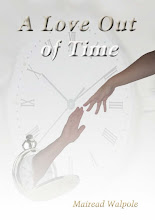
My current novel (second one written, first to be published) was actually one of those scraps of paper in a file cabinet. During my pregnancy with my second child I had a series of very strange dreams and captured the impressions and concepts on paper only to toss them in the “writing” file for me to flesh out some day. And there the notes sat until a year later when my sister-in-law and I were having a sort of snark-fest about following one’s dreams versus the reality of needing a steady income and benefits. The particulars are not that interesting, and hardly flattering to either of us, but the end result was her tossing down the gauntlet for me to do something about my writing rather than dream about it. To further toss kerosene on the flames of our snit, she send me information about a writing contest on Gather.com and essentially dared me to (1) write the novel, and (2) enter it.

I am a Taurus on the cusp of Aries with Leo overhead at the moment of my birth. If you know anything about astrology, you can imagine what my response was. The end result was the first draft of “A Love Out of Time.” The story had some technical issues, POV shifts that gave a number of readers whiplash, way too much back-story, and not nearly enough dialogue but for a first novel written in 30 days it finished in the top third of the first round. (At the bottom of the top third to be precise, but still a respectable finish in my humble opinion given the speed under which it was written.)

The hard work began after the first round of the contest was over. It was at this point that “A Love Out of Time” became something more than a “so there” to my sister-in-law. The feedback I received made me realize that I might have something worth working on and so began a year of critical review and edits. I edited my novel because I found a voice within that would not be silenced. The characters became as familiar to me as my family. I wrote because I could not imagine going back to the place where I jotted down my thoughts and filed them away for a “some day” that might never happen.

Since “A Love Out of Time” was born, I have gone back to my file cabinet and taken out a number of my old ideas to see what else is speaking to me. I found a legal thriller that I wrote under a different name that I am knocking the dust off of. Sandwiched between some really awful poetry, I found the outline and first scene of what is going to be the second novel in a series I am tentatively calling “The Time Walkers” with “A Love Out of Time” being the first book in the series.

Now when people ask, “Why did you write a novel?” I say, because it is what I do.

Saturday, September 27, 2008

When Constructive Criticism Isn’t…

The writing group I belong to was recently swapping stories about critiques we’ve received as well as given. What became very obvious in the discussion were the varying interpretations of the term “constructive criticism” and what specifically differentiates constructive from destructive comments.

I think that perhaps the real questions should be:
Why did you choose a particular person to read your work and offer comments?
What do you hope to gain from their critique?
Why are you writing in the first place?

There may be a variety of reasons you chose someone to read your manuscript. I am just going to focus on the most obvious – whether or not the reader likes the book. Since you are looking for a general opinion on the book’s appeal, then wouldn’t it make sense to inquire whether the genre is something that person would buy in the first place? One can argue that good writing is good writing regardless of the genre but I think that also assumes a certain amount of sophistication in the average reader that may not exist. I have a dear friend who has no interest in reading paranormal romances (the genre of my soon to be published novel) so asking her to read my novel and provide a critique is unlikely to provide me with any insight on whether to story would interest my target market. She is an excellent business and technical writer so perhaps asking her to serve as an editor would be better but if she can’t stand the genre then there is a risk of her not being as focused or engaged in the process as I need her to be.

Perhaps my viewpoint is more business oriented than creative but in essence you are performing market/consumer research when you ask people to review your work. If you aren’t taking the samples from a population of your targeted consumers, then the information has little use in determining whether your book will have market appeal.

Critiques, constructive or otherwise, are valuable to an author. Even a comment like “this sucks, try again” conveys insight on your work. No, it doesn’t mean toss the manuscript in the nearest shredder or drop the reviewer from your Christmas card list. What this statement means is that the reader did not like the book and you should either follow-up with the person to determine why – if possible – or widen your sample population to see if this comment is an outlier or indicative of a problem you may be too close to see.

I like to have someone read my story to find the technical problems (grammar, punctuation, typos, etc.) and a different person to read for the creative aspects. Can one person do both? Sure, they are called professional editors. Your friends, family, and other writers might be able to do that for you but it may be more effective to split the purposes.

The last question, why you write in the first place, will also help you determine who to ask for critiques. If you write to entertain others then your focus for critiques will be different than if you write to educate or to enlighten. Writing to entertain is more or less writing for others even though you may also be writing to quiet those pesky voices within. (See last blog entry.) Thus, your focus should be more on what is going to appeal to your readers. Writing to entertain does not require quite the level of technical finesse and wordsmithing as say a piece geared towards a peer-reviewed journal. There are a number of very popular authors whose grasp of the basics in sentence structure and punctuation leaves much to be desired but their readers either don’t mind or don’t notice because they enjoy the stories.

So, when does constructive criticism cross the line into an attack on your story or your craft? When you let it - until then it is simply feedback.

Saturday, September 13, 2008

Silencing the voices within - aka character development

Sounds like a rant on multiple personality disorder doesn't it? Some of my other writing pals and I were discussing the way that characters can take on a life of their own within the recesses of your mind. My husband's take on the whole situation was, "Don't they have medication for that?" Very funny sweatheart, now why don't you go take a nap? [evil grin and manical laughter as I contemplate his knife roll.]

No, it is all good, but in all seriousness - as crazy as this sounds, sometimes a character just won't shut up and leave you alone. As they "talk" to you, the process becomes much akin to meeting a new friend. (or not depending on the character who is doing the talking.)

Maybe this is a struggle for the newbie as a writer and the authors who have a number of best-sellers under their belts just breeze through the process. I don't know - I would love to find out! (translation - hope my book sells, a lot of copies.) In my case, the process goes something like this: initially I sketch out what the character looks like in very rough dimensions, gender, coloring, height, hair and eye color; then I start filling in the specifics and checking facts like geography, time period, etc.; finally, I work on their backstory - most of which may never make it into the story but it helps me listen to what the character "tells" me with the right context.

After this somewhat logical approach, things take a less than rational turn. Night-time is the worst. As I snuggle up to sleep, scenes unfold, dialogue develops and I know its time to forget about shut eye. I have a laptop and my husband bought me a substantial bed rest pillow when I was carrying our second child so I am good to go until my muse decides to give it a rest. (Or my normally tolerant husband points out that being sleep deprived and handling knives isn't so good for retaining his digits.)

Some writers keep a pen and notepad by the bed, others use the mini-recorder devices but I think the main point is that the voices won't let you rest until you listen. And take notes.